The mini-series takes us to new places, yet remains true, at least in its form, to the original story. We are told the tale through interviews that have a distinctly similar feeling to the original letters.
We get one character’s telling of the tale, which is then taken up by another character’s telling of the tale in the future. It is a beautiful way to tell this story.
The beginning of the series is almost beat-for-beat identical to the novel. Then small details begin to diverge until we are in an entirely unknown place altogether.
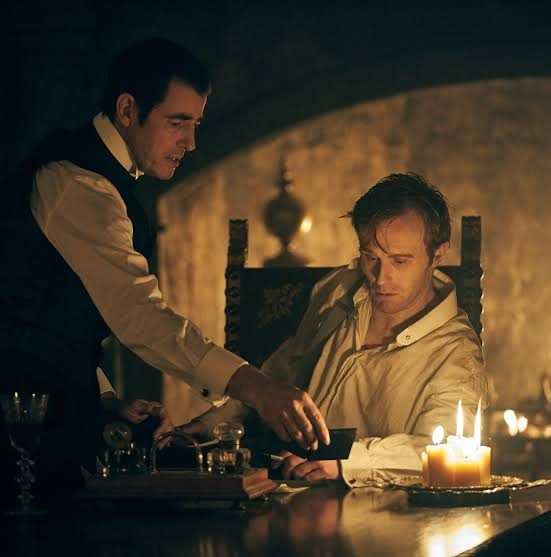
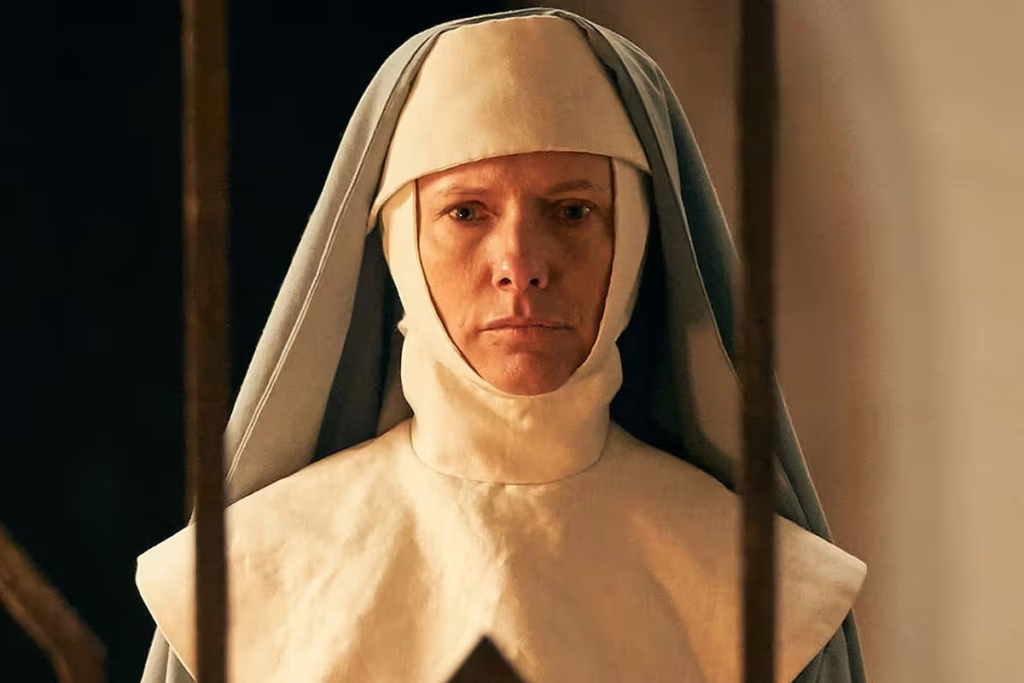
Harker, John Heffernan (Luther & Eye In The Sky), survives at the end of this story to tell the tale to the nun in the convent, until we realise that he didn’t survive. He is undead and he doesn’t realise it.
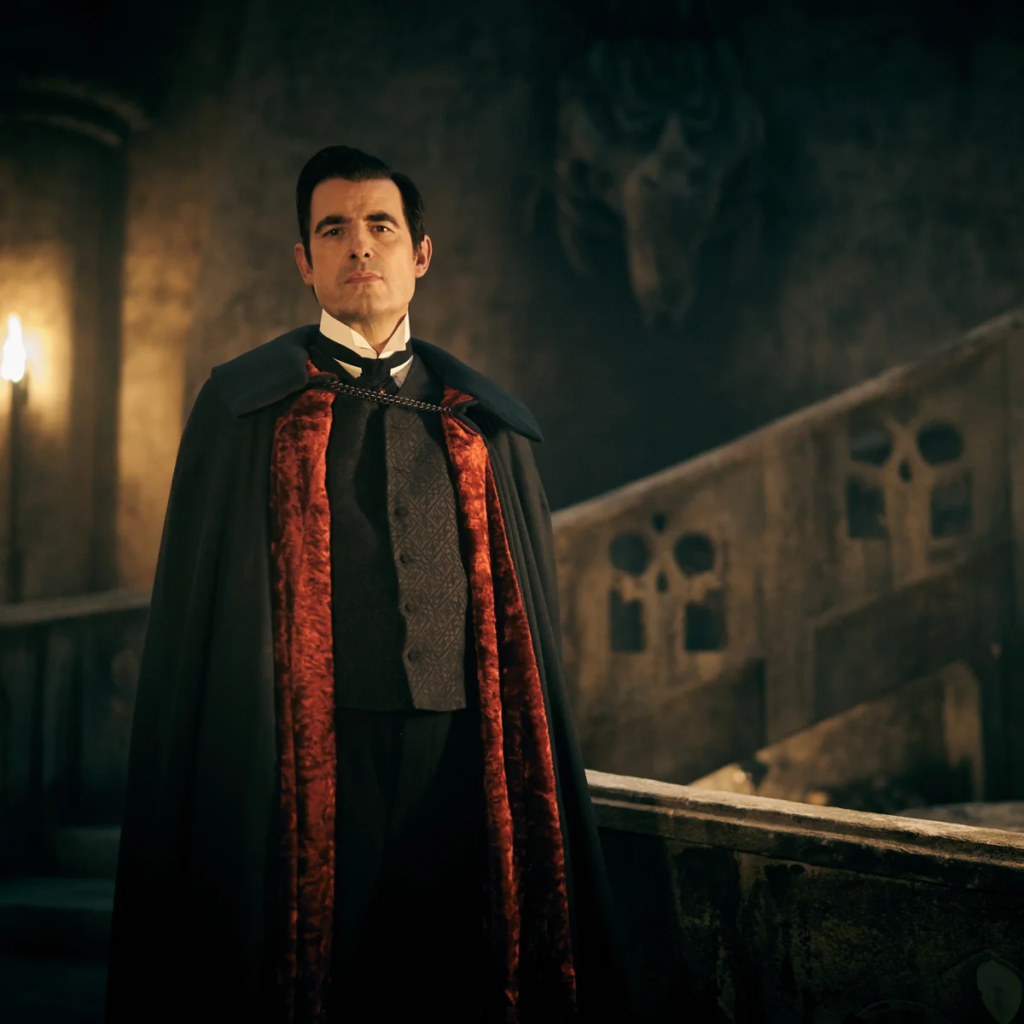
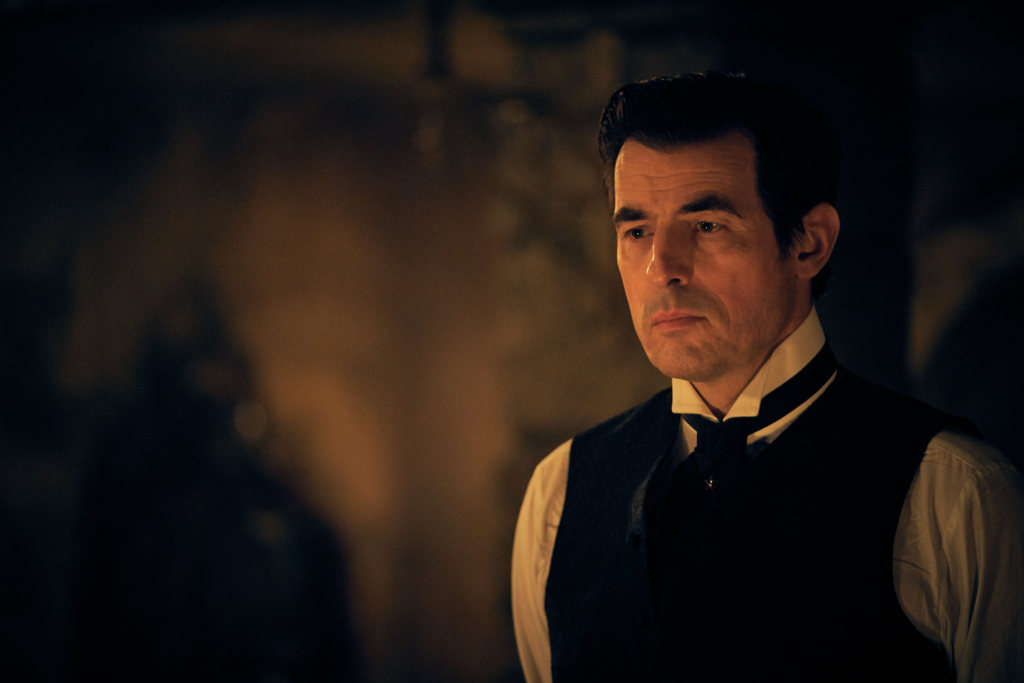
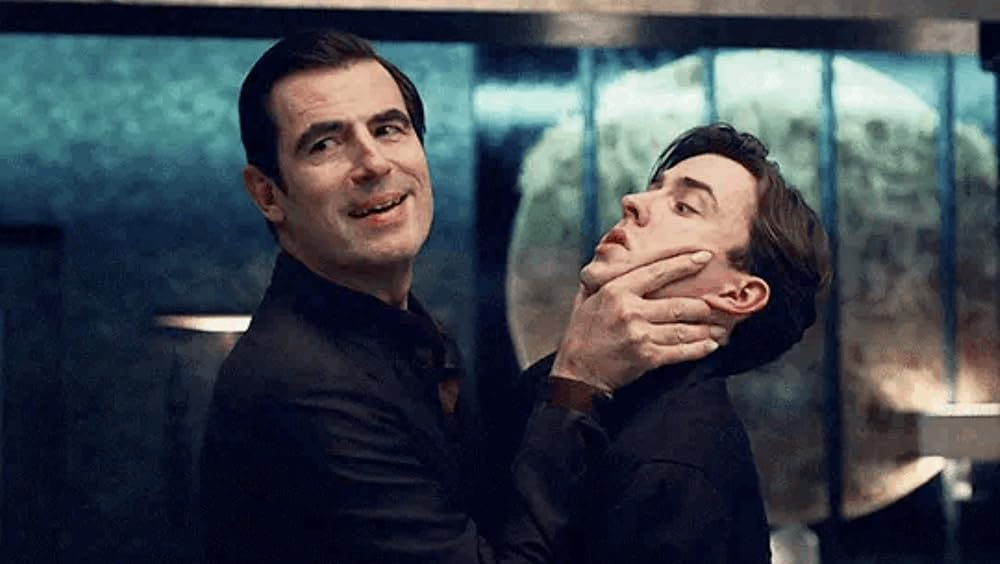
The bridge between the undead and vampires explored in this series is very interesting. Most of Dracula’s, Claes Bang (The Bridge & Borgen), victims simply die.
Some survive as undead; others become full vampires. When I first saw this, I thought that we were seeing a fatal flaw that had appeared in other vampire stories in the past.
In these stories, any person who is bitten by a vampire becomes a vampire. This makes no sense unless the original vampire hardly ever feeds. Otherwise, the entire world would be overrun by vampires very quickly.
This stepped approach makes complete sense within the narrative and allows for the whole John Harker narrative to play out as brilliantly as it does.
Another fantastic plot mechanic is ‘Blood is Lives’. Everyone who hears this doesn’t quite grasp its full meaning until Dracula explains it.
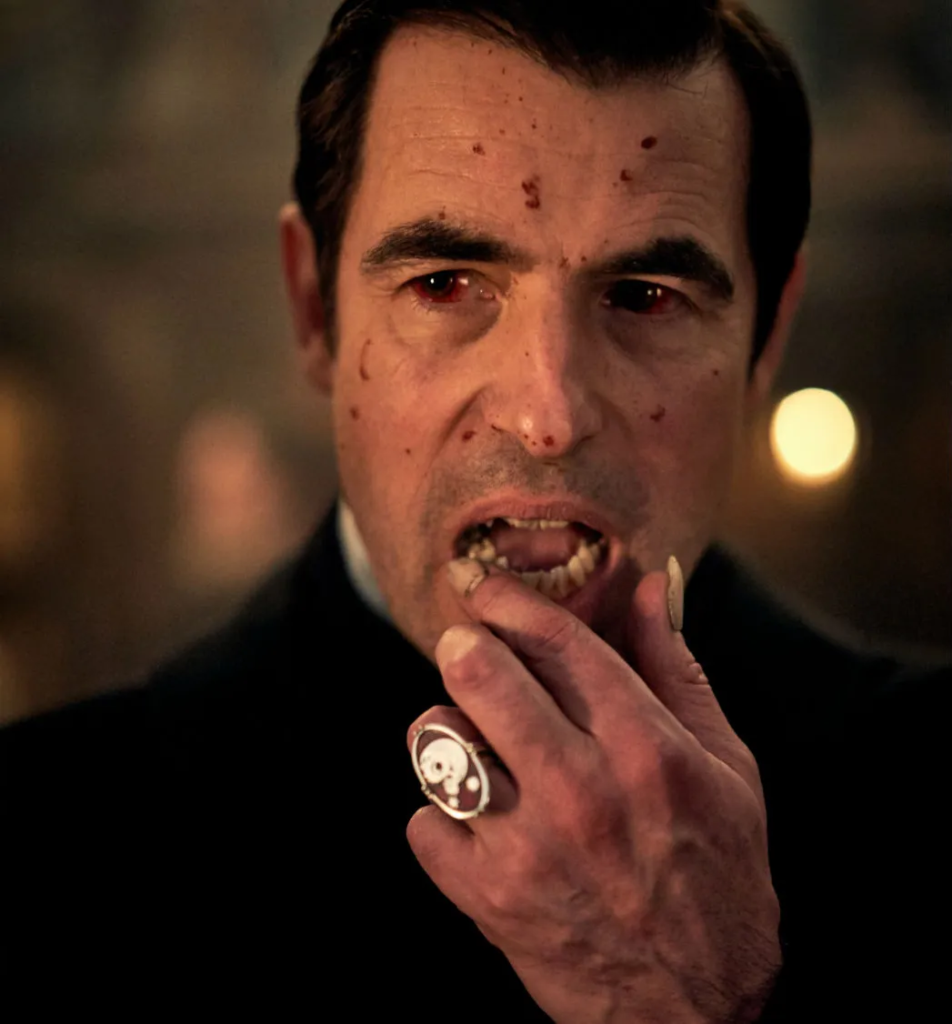
It is pretty literal. As Dracula drinks the blood of a victim, he can see their life and learn their languages. He takes their knowledge and skills. Fantastic stuff.
What better way to manipulate someone than actually to know everything that they have ever done?
The characters are great and well-rounded throughout. The new additions work well, even if they are a little jarring to begin with.
Sister Agatha Van-Helsing, Dolly Wells (The I.T. Crowd & Peep Show), is a great example of one of these. She is the vessel that allows Harker to tell his story.
She carries with her the knowledge of her family bloodline. A bloodline that Dracula is keen to get his hands on so that he can learn more about himself.
The major plot lines continue, including the journey to England. But that is where the similarity ends.
The boat is sunk, and then we skip forward into the future – present day. I did not see that coming. This was a great move, and I really enjoyed it… for a bit.
There were some great aha moments, such as the reveal that the Van-Helsing bloodline continued and was watching over where Dracula had lain at the bottom of the channel all these years.
The bigger issue was that so few of the characters were likeable or interesting.
The end was a bit meh. Very average. Nothing interesting or new. But I guess the question arrises: with such a massive tale, how do you end it well?